Showing posts with label internet. Show all posts

Wednesday, July 21, 2010

Guide: Speed Up Your Internet Connection By Using Google Public DNS

Domain Name System, more commonly called DNS, is the online service mapping a web URL to an IP address. Before rendering a webpage, your Internet Service Provider will perform a DNS lookup to find out the URL’s IP address. Because of increasing website complexity the number of DNS lookups increase thereby slowing down browsing speeds.

Google offers its public DNS service to the web for faster browsing. Since the search engine giant already caches websites, DNS lookups are significantly faster through Google’s public DNS. Follow the below guides to setup Google’s public DNS on your computer.

FOR WINDOWS USERS

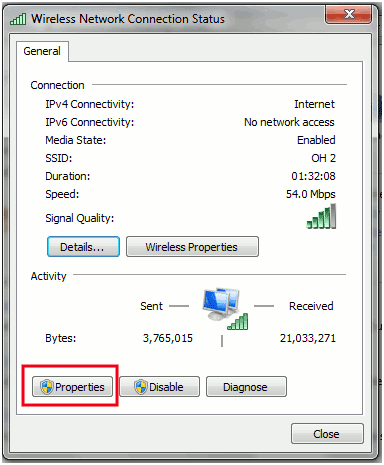
Access your network adapter’s properties. (Go into Control Panel -> Network and Sharing Center)

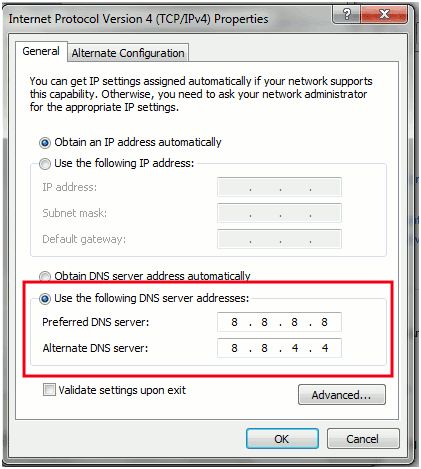
 Enter the IPv4 connectivity options and change the preferred and secondary DNS server to 8.8.8.8 and 8.8.4.4 respectively.
 
Click OK and restart your internet connection to apply the new settings.

FOR MAC USERS

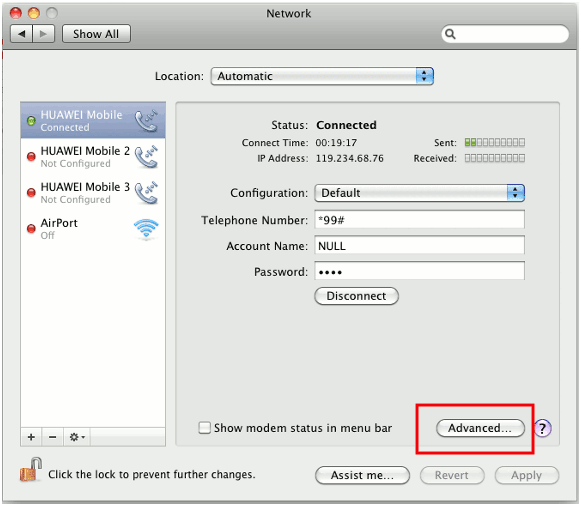
Select your network by adapter by going to System Preferences -> Network.


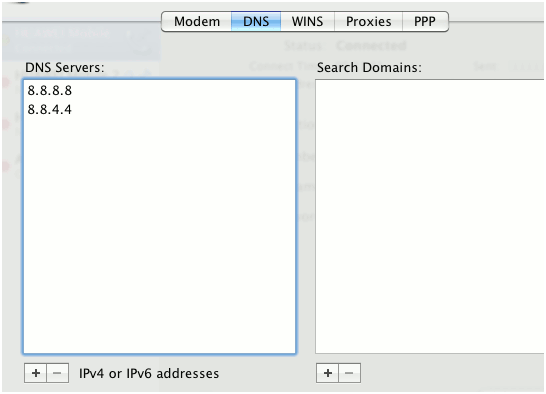
Add the same DNS servers in your adapter’s advanced properties.


Confirm the settings and restart your internet connection to apply them

FOR LINUX (UBUNTU) USERS

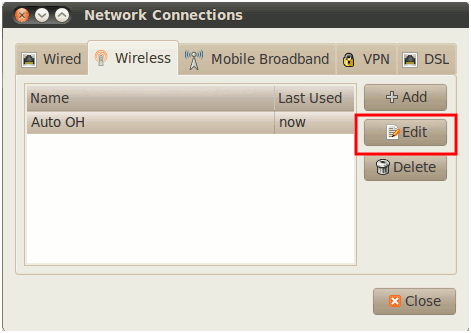
Enter you adapter’s properties through System -> Preferences -> Network Connections. Then go to the Wired or Wireless tab (depending on your connection type) and click on the “Edit” button.


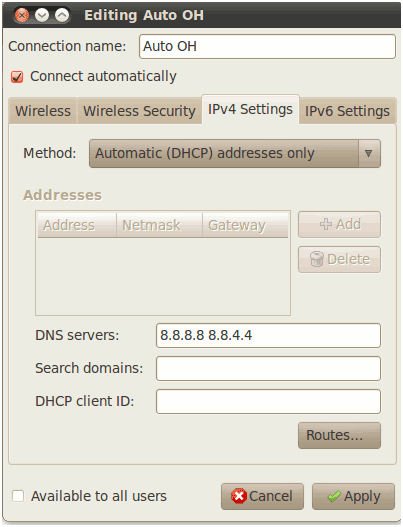
Enter the same servers in the IPv4 settings. Separate the servers by a single space.


google dns5 Guide: Speed Up Your Internet Connection By Using 
Google Public DNS
Click on “Apply” and restart the net connection.
For more information on the matter, you can check out Google’s own webpage regarding its public DNS here.

Friday, January 29, 2010

How we used the internet to tell the story of the internet


Late in the summer we began a project to tell the story of the internet using the internet - that is, asking you what you considered important. It is published today as an interactive people's history from that first Arpanet connection in 1969 (between Charley Kline at UCLA and Bill Duvall at Stanford, both of whom were video interviewed by technology correspondent Bobbie Johnson) to the events of 2009: most significantly - I think - the use of YouTube and other social media to bring footage of the Iranian democracy protests to the outside world after the Ahamadinejad government had forced out the international press and TV.

And there was plenty in between. As the project went on, it struck me the switching on of Arpanet was the mirror image of 1969's other big technological event - the moon landings. While the moon landings were the subject of enormous attention at the time and today, not a great deal developed from them. There were no Mars landings, for example. Arpanet attracted the attention of very few - says Kline: "It was neat that it was working ... but nobody recognised that it was the beginning of something" - but what would develop from that first connection has had a huge influence on how we live today.

The development was not just the work of Arpa-funded computer scientists. Bulletin boards, Usenet and simple chat functions were also parents of the internet today. The interviews include people who put the technology to new uses - Dave Hughes, who turned the bulletin board to political purposes in Colorado Springs in the early 1980s (Roger's Bar), or Richard Bartle at Essex University who co-created multi-user online gaming (MUD) in the late 1970s.

Thanks too to other interviewees: Peter Kirstein at UCL, who, in difficult circumstances, connected Britain to Arpanet in 1973; Howard Rheingold on the early days of online communities; Nigel Titley on connecting British Telecom to the internet (without his superiors really wanting him to); Philip Edwards' tale of spam at the first school online in Wales; Ellen Buddle on being a teenager in the chatrooms of 2001; Dean Whitbread on podcasting; and Dave and Valerie Goodman, who met on Flickr and, when they married, were celebrated by the site as the first Flickr wedding. A lot of it is the story of people trying things out - and finding that they worked, sometimes better than they expected.

Finally, thanks to everyone who helped us tell the internet's story, many of whom are quoted in the interactive people's history.

Wednesday, August 5, 2009

Internet Connection Speed: The Top 10 Countries

At the end of 2008, approximately 19 per cent Internet connections around the world were at speeds greater than 5 Mbps — a 21 per cent increase over the average global connection speed at the end of 2007.

This is according to the State of the Internet report, a quarterly study by Akamai Technologies, the US-based Internet content distribution giant. The State of the Internet report tracks average connection speeds for countries around the world.

Check out the top 10 nations in terms of average Internet connection speed.

1. South Korea

South Korea rules supreme when it comes to Internet connection speed and broadband connectivity. It is the world’s No.1 with average connection speed of 15 Mbps, ten times the global average!

During 2008, South Korea’s rate of quarterly change appeared to be locked into a cyclical pattern, with quarterly decreases being recorded in the first and third quarters, and increases seen in the second and fourth quarters.


For the whole year, South Korea saw a modest 7 per cent rise in their levels of high broadband adoption. South Korea is also ranked first in terms of high broadband connectivity with 69 per cent connections above 5 Mpbs.

2. Japan

Japan ranks 2nd in terms of Internet connection and high broadband connectivity. Japan ranks 2nd in terms of high broadband connectivity. About 54 per cent of the connections in Japan are above 7 Mbps.

3. Hong Kong


Hong Kong ranks third with an Internet connection speed of 6.9 Mbps. The country ranks fifth in terms of high broadband connectivity with 38 per cent of the connection above 5 Mbps.

4. Romania


Romania is at the fourth position with a Internet connection speed of 5.7 Mbps. The country ranks third in terms of high broadband connectivity with 45% of the connection above 5 Mbps.

5. Sweden

Sweden is at the fifth position with a Internet connection speed of 5.6 Mbps. Sweden ranks fourth in terms of high broadband connectivity with 39 per cent of the connection above 5Mbps.

6. Switzerland

Switzerland has bagged the sixth position with an Internet connection speed of over 5 Mbps. The country however does not figure in the top ten list of countries with high broadband connectivity.

7. Netherlands

Netherlands ranks 7th with an Internet connection speed of 4.9 Mbps. The country ranks 7th in terms of high broadband connectivity with 28 per cent of the connections above 5 Mbps.

8. Belgium

Belgium is at the 8th position with an Internet connection speed of 4.7 Mbps. The country ranks sixth in terms of high broadband connectivity with 31 per cent of the connection above 5 Mbps.

9. Slovakia

Slovakia bags the ninth position with an Internet connection speed of 4.5 Mbps. The country does not figure among the top ten in terms of high broadband connectivity.

10. Norway

Norway ranks tenth with an Internet connection speed of 4.5 Mbps. The country ranks fifth in terms of high broadband connectivity with 38 per cent of the connection above 5 Mbps.

United States is at the 17th position with an Internet connection speed of 3.9 Mbps, up approximately 8 per cent from the average connection speed for the first quarter of 2008.

In terms of Internet connection speed, China is way behind leading economies with an average Internet connection speed of 833 kbps.

India has been ranked at a dismal 115th among 223 countries in terms of average Internet connection speeds. India has an average Internet connection speed of just 772 Kbps compared with the global average of 1.5 Mbps.
Related Posts with Thumbnails

Popular Posts

3D Live Statistics

Join the Team

Twitter